Susi Gutsche
about
Susi Gutsche is a research-driven artist with a background in Social Design – Arts as Urban Innovation, humanities, and scientific laboratory work. She participated in archaeological excavations, worked in clinical research settings, and collaborated with research institutions, integrating scientific methods into her artistic experiments.
Her work explores the intersection of art and everyday life, routines, and their aesthetics, addressing societal and environmental processes (in urban contexts). Through an experimental approach, she engages with multiple media, combining video, photography, participatory actions, unconventional materials and technologies. Currently she is especially interested in visual ruptures and non-smooth aesthetics.
Portfolio & cv

digital testaccio – in progress: 2025
Democracy Through Waste: Plastic fragments become contemporary ostraka. Contemporary voices are scratched on waste, just as ancient Athenians inscribed names on ceramic sherds, to vote for banishment. Each voice leaves a physical trace, creating a participatory archive navigating between ancient voting practices and contemporary environmental democracy.
The project idea evolves from an early stage research line of the project TRACEWASTE (2022) into a multi-layered artistic exploration connecting archaeological artifacts with digital traces, bridging ancient waste cultures with contemporary democracy and health issues. The project should create a “future archaeology”, a space where we experience how today’s decisions become tomorrow’s archaeological layers.

Health and Cultural Memory: Finds from Roman latrines in Vindobona (Vienna) with documented fleas and larvae connect with today’s microplastic analyses because both document invisible health risks in everyday objects. Ancient ceramic fragments are being repurposed and re-connected. Visual Archaeology: Ancient drawing aesthetics inspire contemporary data visualization; waste distribution patterns become archaeological maps.
The ongoing research project received funding in the framework of the “Startstipendium Medienkunst” from the Federal Ministry for Housing, Arts, Culture, Media and Sport Republic of Austria


Laten(t)cy – in progress: 2025
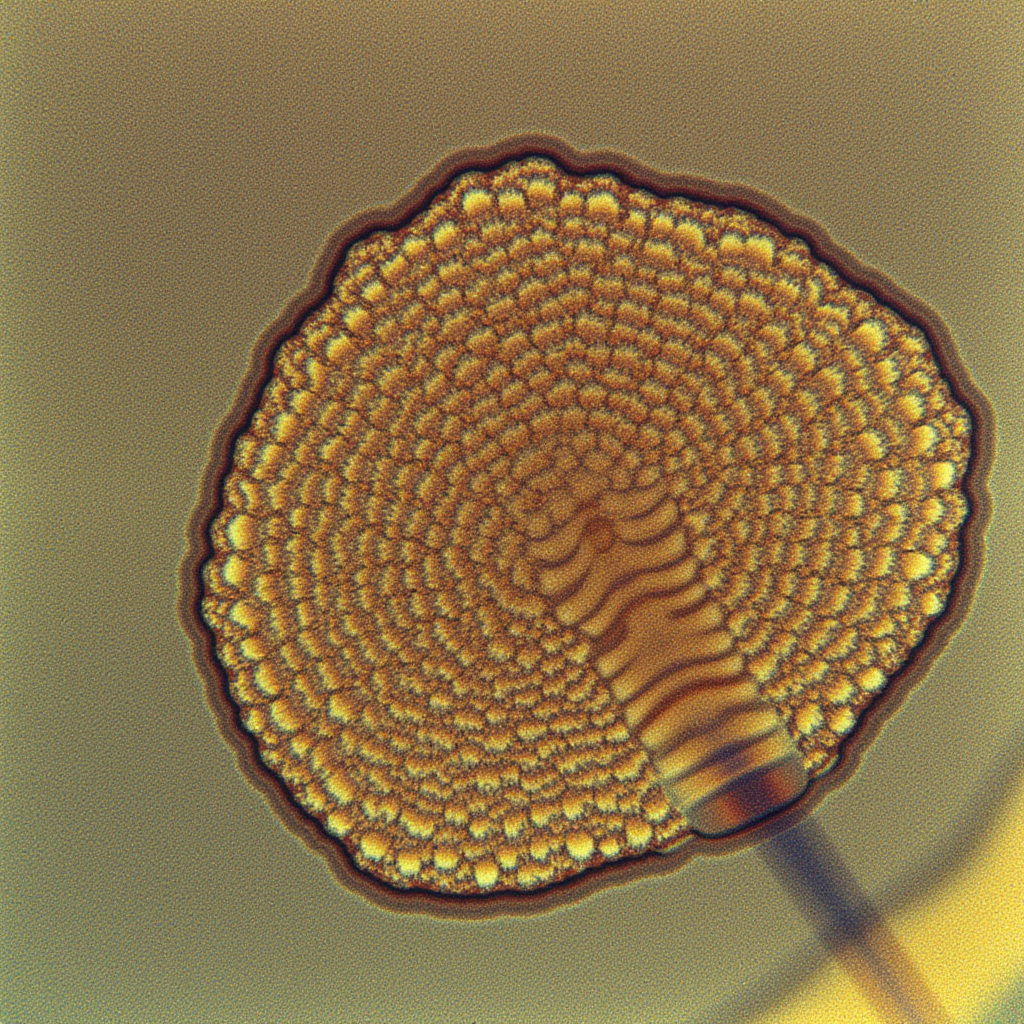
With a speculative visual decoding approach to future evolution of different species of aspergillus, the project questions the notion of lethal beauty, both latent and with ever decreasing latency. The power of AI through image generation and pattern processing will be addressed presented twofold: as a positive new tool enabling rapid developments in human medicine, but also as potential threat that can lead to breaking changes. Viewed from a dystopian angle, AI hallucinations can also have novel artifical models come up with new lethal species, leading to ultimate chaos for humanity. When already (natural) climate change contributes heavily to growth of new organisms and unknown pathogens, how will different species of artificial aspergillus look like?
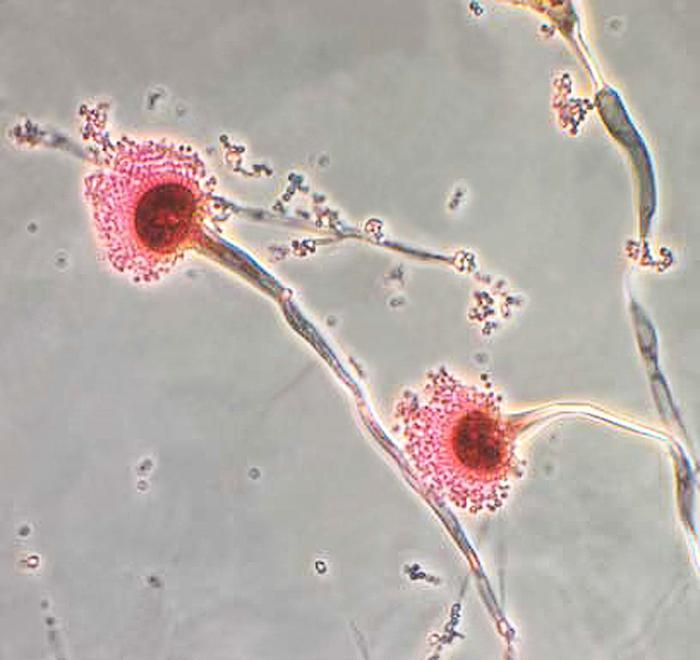
We selected 40 representative scientific images of different species from the aspergillus family from medical databases to train our own task-specific image generation model. We aim to provide a case study on the aesthetics that can be produced with specialised, artificially restricted models leading to speculation about possible future types of aspergillus.
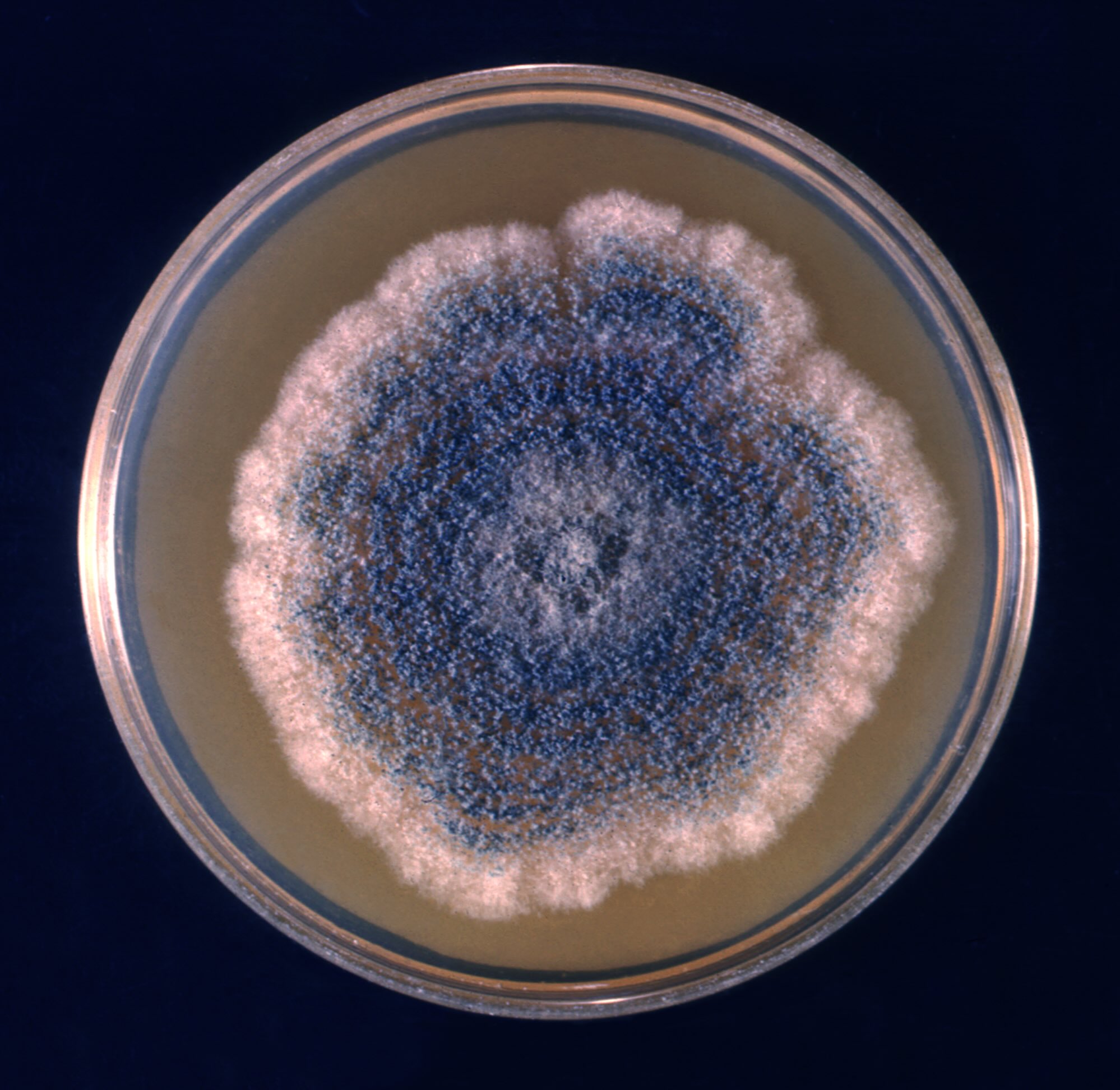
aspergillus
Aspergillus is a large genus of several hundred mold species found worldwide, with some causing fungal infections (aspergillosis) in humans and plants, particularly A. fumigatus and A. flavus. Other species have important commercial applications, including A. oryzae and A. sojae in Asian food fermentation (sake, soy sauce), and A. niger in chemical production.
Some species serve dual roles, being both industrially useful and potential pathogens.


TRACEWASTE 2022
The project TRACEWASTE observes and visualizes garbage movements from a citizen’s perspective to explore future urban life in the context of waste management. It tracks discarded objects using geolocation methods, providing insights into waste whereabouts, transport durations, distances, and emissions. IoT devices (0G) in a low power wide area network track various types of waste across Italy, with a special focus on textiles and plastics. Monitoring rubbish collection vehicles within Rome additionally captures urban waste collection dynamics. The interactive audio-visual installation, resembling an island of waste, challenges waste disposal culture, triggering discussion on global waste challenges. An interactive interface visualizes garbage routes, allowing hands-on exploration through a touch screen. The soundscape incorporates electromagnetic emissions from tracking devices and recordings of rubbish trucks, and urban waste sounds. The non-linear interaction between installation and viewers creates a unique experience. We are living in the era of trash, what will the future look like?


invasive Gardening 2021
A project about Viennese Allotment Gardens. In the framework of the project a theoretical article has been written, evaluating the status quo of viennese allotments using public data and interviews done during the research process, in order to initiate participative moments and establish a manifesto. The outcome of the project is a 8.45’ experimental video, a “dystopia of the present”
Through the 360° perspective of a robotic lawnmower, the viewer explores a viennese allotment garden. A voice-over articulates the viennese allotment garden law. The research-based short documentation concentrates on the loss of Biodiversity in private gardens due to ‘invasive gardening’. The viewer observes and accompanies the mowing robot on its daily routine. Questions about common use of green space in urban contexts are raised. Should there be a Right to Green in cities for all? Is the detached house with a green strip instead of a garden in cities not an outdated concept?


Adieu mein F42.1 <3


#ofthedead 2020
“Who controls the past controls the future: who controls the present controls the past.” George Orwell, 1984, Chapter 3,
A collaborative project by Dimitrije Andrijevic, Susi Gutsche and Evgeniia Kozlova about Death Announcements on Social Media, especially focusing on the content and aesthetics of Death Announcements on Instagram. The outcome of the project is a illustrated book that tells stories about deceased persons using hashtags as narrative tools. The book was presented as a reading performance in the Social Design Studio.
The project opens a discussion and reflects on immortality, privacy after death, digital heritage and the property and future of memory. What is the future archive of our memories and remembrance? Do we need to discuss the digital will? Who owns our memories or digital legacy? Corporates like Meta?


This illustrated book is an observation on death announcements on social media. It examines forms of mourning on social media by focusing on death announcements that are posted on the social network services Instagram and Facebook. Most of the posts under exploration are published by the accounts belonging to dead persons and from accounts related to the deceased. The book is recreating the images of the posts with abstract sketches and lists related hashtags of every entry. Our artistic survey aims to trigger a broad discussion of the phenomenon of how we talk about death on social media.
The way that death announcements happen online trigger plenty of new effects, such as:
– influences the identity of the deceased person
– shapes temporary memory
– tells a lot about the living person that is posting
– reveals a new way of community mourning
– the emotions are expressed in a new language (emojis, hashtags, etc.) – death announcements in social media get out of control with sometimes severe results
©images: Dimitrije Andrijevic, Susi Gutsche, Evgeniia Kozlova


abstand 2020
An Abstand is defined from a specific point to another specific point. Abstand is a major aspect of daily living. There is an Abstand that you keep in public space, an Abstand to interact with people. Especially within a pandemic we are all keeping a greater Abstand than we are used to. As we see it, Abstand is the absence of (the social) touch.
Abstand is a collaborative 24h performance-video project, that reflects on isolation, realised by Dimitrije Andrijevic, Charlotte Heller and Susi Gutsche. Each team member built a capsule, a tiny room and lived in/locked themselves in this capsule for 24h at the same time. Separated from each other but connected mentally by doing the same thing at the same time for 24h, we documented this performance via our laptop cameras, that monitored us the whole day. The result, a 3 channel Video Installation with sound, to be screened at 3 different locations in the city, simultaneously. ©images and videos: Dimitrije Andrijevic, Charlotte Heller, Susi Gutsche


We wanted to reflect on the current times of self-isolation in the form of an experimental film by making the Abstand between us as big as possible. For this purpose, each of us built their own isolation capsules – a room within a room, to live there for 24 hours, every single movement captured by our laptop cameras. We chose this medium because it is currently the dominant way of communication. We are showing how our rooms have become our capsules, metaphorically and literally, using this installation to both bridge and realise the distance between us. We came to the conclusion that in the current situation, it does not really matter if we are apart only a few miles or on completely different planets, it just all feels the same.

Material schwein 2019
“Rethink Grocery” Exhibition Social Design Studio. Casted sculptures out of pork waste, reproducing and breeding pigs out of gelatine. Circularity of pigs out of pork waste.
12 different development stages of artificially grown pork pigs in petri dishes.


Material Schwein is putting the focus on the material gelatine that is produced mainly out of pork “waste” from industrial slaughterhouses. Gelatine can be found in a wide range of everyday products, especially in sweets. This project tries to reflect on the reduction of pigs to materials of human consumption. By investigating the material gelatine, a new hybrid pig breed (lidl1) emerges.
Different stages of development of this breed can be observed.

